---
title: "History of Love Spells: Ancient Magic to Modern Practice"
description: Explore the history of love spells from ancient binding tablets and medieval charms to Victorian occultism, modern witchcraft, online spirituality and AI-era ritual guides.
image: https://lost-love-spells.co.za/hubfs/A%20spiritual%20altar%20with%20candles%2c%20rose%20petals%2c%20and%20a%20handwritten%20intention%20card%20prepared%20for%20a%20lost%20love%20spell..png
---
[](https://lost-love-spells.co.za)
[](https://lost-love-spells.co.za)
- [Home](https://lost-love-spells.co.za/en-us/)
- Parent Pages
.png?width=1125&height=750&name=lost%20love%20again%20by%20Yola%20(1).png)
##### Spells Restore Lost Love
Experience the power of Lost Love Rituals with Yola, a renowned Psychic Reader. Restore your soulful love and reconnect with your soulmate today! only @ Lost Love Spells By Yola
[Talk To Lady Yola](https://lost-love-spells.co.za/contact-us)
23/08/2026
# History of Love Spells: Ancient Magic to Modern Practice
Explore the history of love spells from ancient binding tablets and medieval charms to Victorian occultism, modern witchcraft, online spirituality and AI-era ritual guides.
## The History of Love Spells: From Ancient Magic to Modern Spiritual Practice
People have tried to understand, attract, preserve and recover love for as long as we have written records of human hopes and fears.
Across different historical periods, people have turned to:
prayer,
charms,
amulets,
written formulas,
herbs,
ritual objects,
divination,
astrology,
folk traditions,
religious devotion,
and other forms of spiritual practice
when love felt uncertain.
But the phrase **“love spell”** can be misleading if we imagine that people across thousands of years and hundreds of cultures were all practising the same thing.
They were not.
An ancient Mediterranean binding tablet is not the same tradition as a medieval English charm.
A Southern African ancestral practice should not be treated as a variation of European witchcraft.
A devotional prayer is not automatically a spell.
And a modern manifestation video on TikTok is not simply an ancient ritual performed through a smartphone.
The history is much more interesting than that.
**Love magic has continually changed alongside religion, marriage, medicine, gender roles, literacy, trade, migration, technology and ideas about personal choice.**
This guide traces that history while separating:
**documented historical practice**
from:
**later legend, romantic storytelling and modern reconstruction.**
That distinction is important because a trustworthy history of love spells should explain what evidence actually exists rather than turning every famous romance from the past into a magical success story.
## 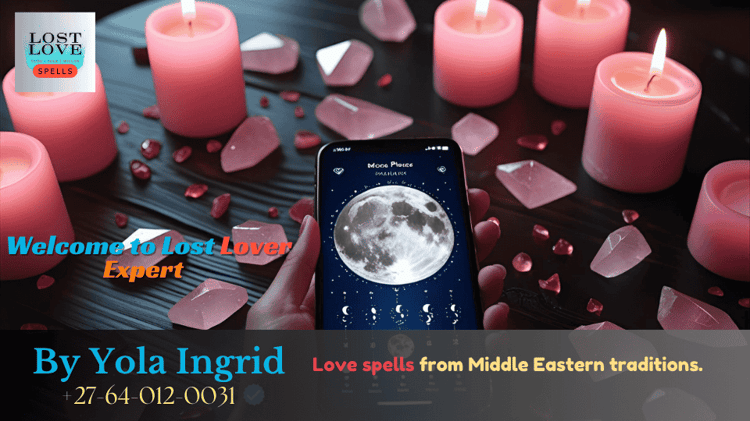
*Image: Modern love spell altar with pink candles, rose quartz, and a smartphone showing moon phase app*
*Step into a modern love spell ritual that beautifully blends age-old magic with today’s technology. On a sleek, thoughtfully arranged altar, soft pink candles flicker with a warm, inviting glow – their gentle light symbolizing affection, hope, and the promise of new beginnings. The comforting hue instantly sets a romantic, calming mood, perfect for focusing your energy and intentions.*
*At the center of the altar, polished pieces of rose quartz radiate the universal energy of unconditional love. Carefully chosen and cleansed, these healing crystals are renowned for attracting positive vibes, nurturing the heart, and deepening bonds. Placing rose quartz near your candles and other spell ingredients helps amplify your intentions and welcomes loving energy into your space.*
*Adding a distinctly modern twist, a smartphone lies elegantly atop a silk cloth, displaying a moon phase app. This powerful tool ensures your ritual syncs perfectly with lunar cycles, tapping into the natural rhythms that have guided love spellwork for centuries. With just a swipe, you can time your ceremony for a waxing moon to attract new romance, or a full moon to strengthen and celebrate lasting relationships.*
*This modern altar arrangement empowers you to harness both digital convenience and spiritual tradition. It invites you to be intentional, mindful, and inspired in your quest for love—proof that meaningful rituals can evolve with every generation. Ready to create your own love story? Let this perfect union of candles, crystals, and a touch of tech light the path to a heart-centered transformation.*
[Let's Chat](https://lost-love-spells.co.za/lets-talk-and-chat-on-whatsapp)
## 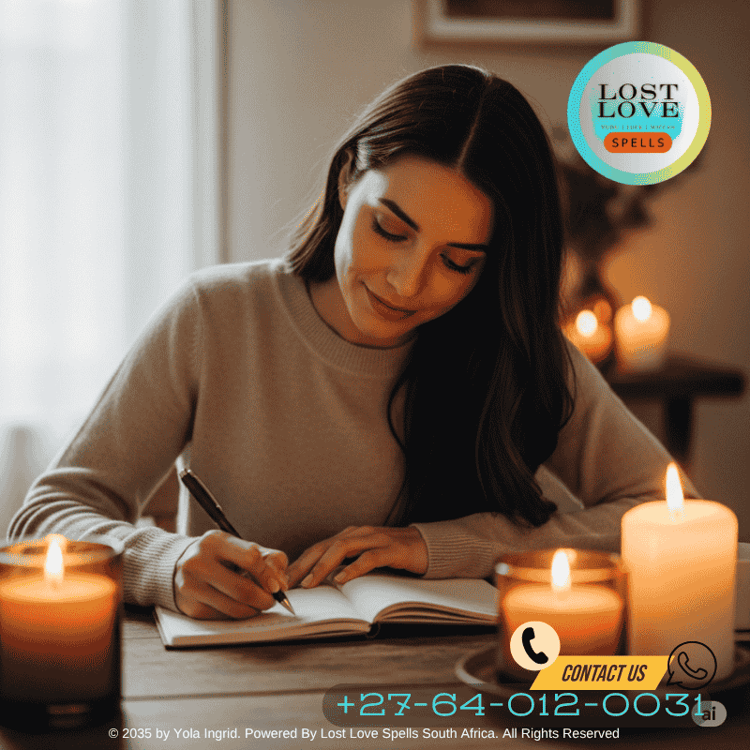
*Image: A woman sits quietly, enveloped in the soft glow of flickering candlelight, as she carefully journals her intentions. The warm, dancing flames cast gentle shadows around the room, creating an intimate atmosphere perfect for her modern love spell ritual. With every stroke of her pen, she weaves her hopes and desires onto the pages, infusing each word with heartfelt intention. The air is thick with a sense of magic and possibility, as the subtle aroma of the candles mingles with her thoughts, amplifying her connection to the universe and her deepest wishes for love.*
[Let's Chat](https://lost-love-spells.co.za/lets-talk-and-chat-on-whatsapp)
---
## Quick Answer: What Is the History of Love Spells?
Forms of **love magic are documented in ancient societies**, including the Greek and Roman worlds, where surviving inscriptions, amulets and magical texts show people seeking attraction, sexual desire, binding, separation and relationship influence.
Magic continued in different forms through medieval and early-modern Europe, where people sought practitioners for everyday concerns including healing, finding lost property and matters of love. Scholarly research confirms that love magic was one of the practical services sought from magical practitioners during these periods.
Later centuries brought new forms of occultism, folk practice, spiritualism, ceremonial magic and eventually modern pagan and New Age movements.
Today, the internet has transformed how spiritual information is:
discovered,
shared,
commercialised,
adapted
and practised.
Researchers studying digital religion note that the internet does more than distribute religious information: it can reshape authority, ritual practice, community and the distinction between online and offline spiritual life.
The result is not one uninterrupted magical tradition.
It is a long history of people repeatedly using the spiritual ideas available to them to respond to one of humanity's oldest concerns:
**love.**
## A Simple Timeline of Love Magic
| Period | Common historical themes |
| --- | --- |
| Ancient Mediterranean | Written spells, binding tablets, amulets, invocations, attraction and separation magic |
| Late Antiquity | Mixtures of magical, religious, astrological and written traditions |
| Medieval period | Charms, folk practitioners, prayer formulas, herbs, amulets and practical magic |
| Renaissance/Early Modern | Astrology, grimoires, folk magic, learned magic and growing tension around witchcraft |
| 18th–19th centuries | Folk traditions continue alongside mesmerism, spiritualism and occult revival |
| Late 19th–20th centuries | Ceremonial occultism, modern witchcraft, neopaganism and new spiritual movements |
| Late 20th century | New Age spirituality, crystals, affirmations, energy language and self-development |
| Internet era | Online practitioners, forums, digital communities, remote consultations and mass access to ritual information |
| Social-media/AI era | Short-form spell content, algorithmic spirituality, AI-written ritual guides and greater concerns about authenticity, safety and cultural context |
This timeline is useful, but it should not be mistaken for a single evolutionary chain.
Many traditions continued alongside one another.
Old practices did not simply disappear when new ones emerged.
## Were Love Spells Really Used in Ancient Times?
Yes.
There is historical evidence for magical practices connected with love and desire in the ancient Mediterranean world.
Among the best-known evidence are inscribed objects often called **curse tablets** or **binding tablets**.
Scholars have documented such tablets from the ancient Greek world over many centuries, and surviving examples concerned many aspects of life—not only hostility or revenge.
They could involve:
competition,
legal disputes,
personal relationships,
and binding another person's actions.
The modern label “curse tablet” can itself oversimplify ancient categories, since ancient terminology distinguished different types of ritual acts and binding practices.
Some surviving tablets concerned erotic or romantic desire.
The British Museum notes that love-related examples could attempt to redirect someone's affection or separate them from an existing partner.
That tells us something important.
Ancient love magic was not necessarily gentle, romantic or consent-centred.
Some surviving practices were explicitly coercive.
## Ancient Love Magic Was Not Always About “True Love”
Modern websites often describe ancient love spells as though people were simply seeking:
soulmates,
healing,
and harmonious marriage.
Historical evidence is more complicated.
People have always experienced:
desire,
jealousy,
competition,
rejection,
sexual longing,
fear of abandonment
and conflict.
Ancient magical texts can reflect those emotions directly.
Some sought attraction.
Some sought sexual desire.
Some sought control.
Some attempted separation.
Some were protective.
This is one reason modern ethics should not be justified simply by saying:
**“People did it in ancient times.”**
Historical existence does not automatically make a practice ethical today.
## What Were Binding Spells in the Ancient World?
The Greek concept commonly discussed in connection with **binding magic** involved restricting or constraining another person through ritual means.
Binding practices were not limited to romance.
They could concern:
court cases,
business competition,
athletics,
personal conflict
and relationships.
The history is therefore broader than today's internet phrase **“love binding spell.”**
Modern relationship-binding practices should not be presented as exact replicas of an ancient tradition merely because both use the word *binding*.
For your dedicated modern discussion, see [Binding Love Spells: Definitions, Ethics and Outcomes](https://lost-love-spells.co.za/understanding-binding-spells-definitions-ethics-and-outcomes?utm_source=chatgpt.com).
## What About Ancient Egyptian Love Spells?
Ancient Egypt contained a rich body of religious and magical practice, and Egyptian material later interacted strongly with wider Mediterranean magical traditions.
However, historical writing should be careful about simplistic claims such as:
**“Egyptian priests regularly performed love spells to Hathor exactly like modern spellcasters do today.”**
Ancient Egyptian religion, temple practice, household religion and later magical texts existed across an enormous period of history.
They cannot responsibly be reduced to one modern-style ritual system.
A more accurate approach is to say that ancient Egyptian religious and magical cultures contributed to the larger historical environment in which people used written formulas, divine appeals, amulets and ritual practices for personal concerns—including relationships.
## Greek and Roman Love Magic
The Greek and Roman worlds provide particularly strong documentary and archaeological evidence for magical practices.
Written tablets and magical texts show that people sought supernatural assistance in extremely personal situations.
Scholarly work on Greek binding tablets spans examples from at least the classical period through the Roman era, illustrating how widespread and personally focused these practices could be.
What survives is important because it moves the discussion away from fantasy.
We do not need to imagine that ancient people cared about romantic uncertainty.
Their own inscriptions show that they did.
## Magic and Religion Were Not Always Separate Categories
Today, people often ask:
**“Was this religion or was it magic?”**
Ancient people did not necessarily draw that boundary exactly as modern readers do.
Modern scholarship increasingly examines how words like *magic* can reflect later classifications and social judgements rather than neat categories recognised by everyone in antiquity.
Practices could involve:
divine names,
prayer-like language,
offerings,
ritual objects
and personal religious behaviour.
Scholars therefore warn against automatically treating every non-official ritual as belonging to a completely separate category called “magic.”
This nuance should be part of any serious history of love spells.
## Love Magic in Late Antiquity
Late Antiquity was a period of enormous religious and cultural interaction.
Older Mediterranean religious practices coexisted and interacted with:
Christianity,
Judaism,
regional traditions,
astrology,
written magical texts
and philosophical ideas.
Some surviving material makes it difficult to draw a sharp line between:
religious devotion,
protective ritual,
magical formula
and personal prayer.
Scholars even discuss historically specific forms of what can reasonably be described as **Christian love magic**, illustrating how religious texts themselves could be adapted into amuletic or magical contexts.
That complexity continued into medieval Europe.
## Did Love Magic Continue During the Middle Ages?
Yes.
But once again, there was no single medieval love-magic tradition.
People lived within:
local folk cultures,
Christian religious worlds,
regional medical systems,
oral traditions,
written charms,
astrology,
herbal knowledge,
and various forms of practical magic.
Researchers studying medieval magic find evidence that people sought magical assistance for everyday problems.
Love was one of them.
A major modern study of later medieval and early-modern England identifies **love magic** among the ordinary services for which people sought practical magical help.
## Medieval Magic Was More Ordinary Than Movies Suggest
Modern entertainment often presents medieval magic as:
secret covens,
dramatic witch ceremonies,
and mysterious sorcerers working entirely outside society.
Historical reality could be less theatrical.
Practical magical services were sometimes sought for very ordinary concerns:
healing,
finding stolen property,
protecting livelihoods,
romantic attraction,
marriage,
and other everyday anxieties.
People did not necessarily divide their lives neatly into:
**religion**
versus:
**magic.**
Prayer, charms, healing practices and folk beliefs could overlap.
## Charms in Medieval Life
Written and spoken charms appear in medieval sources.
Researchers studying early medieval material caution against interpreting every charm simply as evidence of hidden pagan survival.
Some surviving texts exist within explicitly Christian manuscript contexts.
That demonstrates how complicated the relationship between official religion and popular magical practice could be.
A charm might contain:
religious words,
formulaic language,
symbols,
prayer
or other ritual elements.
The categories we use today do not always map neatly onto the past.
## Herbs and Love Magic
Plants appear frequently in the historical imagination surrounding love magic.
Some had:
medical uses,
symbolic meanings,
pleasant scents,
religious associations,
or folk reputations.
But historical herbal magic should not be romanticised as automatically safe.
A substance being “traditional” does not make it harmless.
Some historically used plants can be:
toxic,
irritating,
psychoactive,
or unsafe during pregnancy or in combination with medication.
Modern readers should therefore distinguish between:
**studying historical herbal practice**
and:
**ingesting a historical love potion.**
Those are completely different activities.
Your more specific historical child article can remain focused on [Herbs and Amulets in Medieval Love Spells](https://lost-love-spells.co.za/herbs-and-amulets-in-medieval-love-spells?utm_source=chatgpt.com).
## What Role Did the Church Play?
The relationship between Christianity and magic was complicated.
Church authorities frequently condemned magical practices.
But everyday religious life could still include:
charms,
protective objects,
healing formulas,
saintly invocations,
blessings
and customs whose classification is not always simple.
It would therefore be misleading to say:
**“The medieval Church eliminated love magic.”**
It would be equally simplistic to say:
**“The Church secretly approved love spells.”**
The historical relationship involved:
conflict,
adaptation,
condemnation,
overlap
and changing definitions of acceptable practice.
Your dedicated article on [The Church and Love Magic](https://lost-love-spells.co.za/history-of-love-spells?utm_source=chatgpt.com) cluster can explore that question in greater depth without making it the main history pillar.
## Were Women the Only People Practising Love Magic?
No.
Popular culture often imagines love magic primarily through the figure of the witch or wise woman.
Women certainly appear in histories of magic.
But men also worked as magical practitioners, healers, astrologers and service magicians.
Research on late medieval and early-modern service magic shows a wider world of practitioners often described by historians using terms such as **cunning folk**.
Gender still matters historically, especially in accusations of witchcraft and social ideas about sexuality.
But the story should not be reduced to:
**“women did love magic; men did not.”**
## Renaissance Love Magic
The Renaissance did not simply replace medieval belief with modern science.
European intellectual culture included renewed interest in:
classical texts,
astrology,
natural philosophy,
alchemy,
Hermetic thought,
religious mysticism
and ceremonial magic.
Ideas about correspondences between:
planets,
plants,
metals,
human temperaments
and cosmic forces
became important in some learned magical systems.
Love could be connected symbolically with:
Venus,
particular colours,
plants,
stones
and astrological timing.
However, elite learned magic and local folk practice were not the same thing.
Both existed.
## Astrology and Love
Astrology played important roles in many historical societies.
In European occult traditions, Venus became strongly associated with matters of:
love,
beauty,
attraction
and harmony.
This contributed to practices involving:
Venus symbolism,
planetary timing,
colours,
metals
and talismans.
Modern spell guides sometimes borrow these correspondences while removing them from the complex astrological systems from which they developed.
That is another example of how modern magic often **repackages historical fragments**.
## The Early-Modern Magical Marketplace
People have been paying practitioners for magical services for centuries.
This matters because today's online spiritual marketplace is not entirely new.
What has changed is:
scale,
speed,
advertising,
payment technology
and global reach.
Historically, a person might consult someone known locally.
Today, a person in Johannesburg can contact a practitioner on another continent in seconds.
The emotional need may be familiar.
The marketplace is radically different.
## Were Witch Trials Mainly About Love Spells?
No.
That would be an oversimplification.
European witchcraft accusations developed within complicated religious, legal, political and social contexts.
Love magic could become part of accusations or concern.
But historical witch trials cannot responsibly be described as though they were primarily prosecutions of romantic spellcasters.
This is why specialist history matters.
Popular mythology often compresses centuries of history into one dramatic story.
## Love Magic Outside Europe
A global history of love-related spirituality cannot simply take a European magical timeline and add:
“Africa,”
“Asia,”
“Native Americans”
and:
“the Middle East”
as if each were one uniform tradition.
That structure creates serious historical problems.
Africa is a continent containing thousands of communities and many spiritual systems.
Asia contains enormous religious and cultural diversity.
The Indigenous peoples of the Americas do not share one universal “Native American love spell tradition.”
Likewise, “Middle Eastern magic” is far too broad to describe Islamic, Jewish, Christian, folk, pre-Islamic and regional practices as one system.
Responsible cultural history must become more specific, not less.
## African Love Traditions Require Their Own Context
African spiritual practices are especially important for Lost Love Spells because many readers encounter African traditional terminology on the site.
But the phrase **“African love magic”** should be used carefully.
Different communities understand:
ancestors,
marriage,
herbs,
divination,
healing,
family,
spiritual protection
and relationships
in different ways.
For more appropriate regional context, see [What Is African Traditional Love Magic in 2026?](https://lost-love-spells.co.za/what-is-african-traditional-love-magic-in-2026?utm_source=chatgpt.com).
That article can explore African traditions in greater depth while this history pillar avoids pretending to summarise an entire continent in a few paragraphs.
## Muthi and Historical Context
The term **muthi** is used in Southern African contexts and generally relates broadly to medicine/remedies, although meaning and practice depend on linguistic, cultural and spiritual context.
Online spell websites sometimes use “muthi” as though it simply means:
**“very powerful African magic.”**
That strips the term of cultural context.
Readers interested in this subject should see [The Complete Guide to African Muthi Love Rituals](https://lost-love-spells.co.za/the-complete-guide-to-african-muthi-love-rituals?utm_source=chatgpt.com).
Historical education should help readers understand terminology rather than exoticise it.
## Indian, Chinese, Japanese and Other Asian Traditions
Asia should likewise not be reduced to one magical category.
South Asian religious traditions include enormously diverse devotional, tantric, folk, astrological and regional practices.
Chinese traditions include distinct religious, folk, divinatory and cosmological systems.
Japanese ideas about romantic fate, shrine devotion and relationship blessings should not automatically be relabelled as “love spells” simply because Western readers recognise a romantic purpose.
When writing history, it is better to say:
**“relationship-related ritual or devotional practice”**
when that is more accurate than importing the English occult term *spell*.
## The Problem With Calling Everything a Love Spell
This is one of the most useful lessons historical research gives us.
A modern English speaker may look at:
a prayer,
a charm,
an amulet,
a blessing,
a curse tablet,
a divination,
an ancestral ceremony,
a devotional offering
and a folk remedy
and call all of them:
**“love spells.”**
Historically, the people practising them may not have considered them the same category at all.
This is why cultural context matters.
## Famous Love Spells: History or Legend?
Many websites blend documented history with literary stories.
That can be entertaining.
It becomes a problem when legend is presented as fact.
For example:
### Tristan and Isolde
The famous love potion belongs primarily to medieval literary tradition.
It is a powerful cultural story about:
desire,
fate,
loyalty
and uncontrollable passion.
It is not evidence that the potion was a historically documented working ritual.
### Shakespeare
*A Midsummer Night's Dream* famously uses magical interference with love.
Again, this tells us about cultural imagination surrounding love and enchantment.
It does not prove a real-world spell method.
### Cleopatra
Cleopatra is frequently turned into an occult legend online.
Claims that she used specific “love spells” to control Julius Caesar or Mark Antony should be clearly labelled as later speculation or legend unless supported by credible historical evidence.
A responsible history page should never convert famous people's reputations into supernatural facts merely because the story is appealing.
## Why Literature Matters Anyway
Legends still matter.
Stories such as:
Tristan and Isolde,
Circe,
enchanted lovers,
love potions,
and Shakespearean magic
shaped how later generations imagined romantic enchantment.
Literature can influence real spiritual practice.
Symbols move between:
story,
religion,
folklore,
art
and occultism.
So literary history belongs in the cluster.
It simply needs to be labelled **literature**, not archaeological evidence.
## Love Magic in the 18th and 19th Centuries
By the modern period, magical traditions had not disappeared.
Folk practices continued while new occult movements developed.
The 19th century saw major interest in:
spiritualism,
esotericism,
ceremonial magic,
the occult revival
and new organisations devoted to hidden or mystical knowledge.
Historians treat Victorian occultism as an important part of the development of modern Western magical practice; specialist scholarship traces links between nineteenth-century occult revival movements and later understandings of modern magic.
This period deserves its own supporting article.
That is why I recommend retaining:
`/modern-history-of-love-spells`
but narrowing it specifically to the modern era.
## Victorian Occultism Was Not Just “Ancient Magic Continuing”
Modern occult movements often claimed connections to:
ancient Egypt,
Hermetic wisdom,
Kabbalah,
classical religion,
medieval magic
or other supposedly ancient traditions.
But revival is not the same as uninterrupted transmission.
Modern practitioners sometimes:
reconstructed,
reinterpreted,
combined
or reinvented
historical materials.
Understanding that process is essential to understanding modern spell culture.
## The Rise of Modern Witchcraft
The 20th century brought new religious and occult movements that changed public understandings of witchcraft.
Modern pagan traditions developed new ways of:
practising ritual,
thinking about nature,
structuring magical ethics
and talking about personal intention.
Contemporary witchcraft therefore should not automatically be presented as an unchanged survival of ancient pagan religion.
Some practices draw inspiration from historical sources.
Others are distinctly modern creations.
## Wicca and Modern Love Magic
Wicca became one of the most influential modern religious movements associated with witchcraft.
Modern Wiccan and Wicca-influenced writing helped popularise ideas such as:
ritual circles,
elemental symbolism,
candle magic,
moon timing,
herbal correspondences
and ethical reflection.
However, not every candle spell on the internet is Wiccan.
And not every historical love charm was an early form of Wicca.
For the dedicated ethical resource, see [Ethical Wiccan Love Spells: Respecting Free Will and Intention](https://lost-love-spells.co.za/ethical-wiccan-love-spells-respecting-free-will-and-intention).
## The New Age Transformation
Late twentieth-century spirituality introduced another major shift.
The language surrounding love magic increasingly included:
energy,
manifestation,
vibration,
crystals,
affirmations,
visualisation,
chakras,
intention-setting
and self-development.
Some of these concepts came from older religious or occult traditions.
Others were modified substantially through modern metaphysical and self-help culture.
The result was a more individualised form of spirituality.
## From Spell to Manifestation
One of the most noticeable modern developments is the blurred boundary between:
**spellcasting**
and:
**manifestation.**
A traditional spell guide might say:
“Perform a ritual.”
A modern manifestation guide might say:
“Visualise the relationship.”
Both can involve:
intention,
symbolism,
repetition
and belief.
But they come from different historical conversations.
Social media increasingly blends them.
## The Internet Changed Spiritual Authority
Before the internet, access to specialised occult information might depend on:
books,
local practitioners,
religious communities,
correspondence groups,
or specialist shops.
The web changed that dramatically.
A reader can now encounter:
African traditional spirituality,
Wicca,
astrology,
Hoodoo,
Vodou,
New Age manifestation,
folk Catholicism,
crystal healing
and ceremonial magic
in a single evening.
That accessibility has benefits.
It also creates serious problems.
Researchers studying digital religion observe that the internet changes not only access to religious information but also **authority and ritual practice itself**.
## Online Spirituality Is Not Unusual
Digital religious practice is part of a much wider social transformation.
People now use websites and apps for:
prayer,
religious education,
meditation,
scripture,
spiritual communities
and other forms of devotion.
Pew Research has documented substantial use of digital technology for religious and spiritual purposes, demonstrating that online spiritual engagement is not confined to occult communities.
Love-spell websites belong to this wider digital-spiritual environment.
## What Changed When Love Spells Went Online?
Several things.
### Distance disappeared
Practitioner and client no longer needed to live nearby.
### Knowledge became searchable
Previously obscure ritual information became accessible through search engines.
### Traditions mixed more rapidly
Concepts from unrelated traditions began appearing together.
### Commercialisation increased
Payments, consultations and spiritual products became easier to sell globally.
### Authority became harder to judge
Anyone could claim expertise.
### Ritual became visual content
Instagram, YouTube and TikTok transformed rituals into images and short videos.
### Copying increased
Articles and rituals could be reproduced without cultural or historical context.
## Digital Love Magic Created a New Authenticity Problem
A website can look ancient while being written yesterday.
A ritual may be described as:
**“2,000-year-old African secret.”**
But where did it actually come from?
Is there historical evidence?
A practitioner?
A family tradition?
A nineteenth-century occult book?
A modern blog?
Or another AI-generated website?
Digital spirituality makes source evaluation more important than ever.
For this reason, your What Is Honest Love Spell Information Online? resource should be an important supporting link from this history pillar.
## Social Media Accelerated the Change Again
The internet first made spiritual information searchable.
Social media made it:
short,
visual,
algorithmic,
viral
and personality-driven.
A ritual that once required several pages of context can become:
**“Do this tonight to make them text you.”**
The missing information may include:
- historical origin;
- cultural meaning;
- safety;
- ethics;
- consent;
- religious context;
- and whether the alleged tradition is authentic.
This compression is one of the biggest changes in modern spell culture.
## TikTok and Short-Form Love Magic
Short videos are particularly effective at spreading:
simple rituals,
ingredient lists,
moon practices,
affirmations,
tarot interpretations,
manifestation methods
and “signs” content.
But popularity is not the same as historical accuracy.
A ritual receiving millions of views does not prove it is:
ancient,
culturally authentic,
safe,
or effective.
Digital literacy is now part of occult literacy.
## AI Is the Newest Stage in the History
Artificial intelligence adds another layer.
AI systems can generate:
ritual instructions,
historical explanations,
ingredient lists,
prayers,
articles
and supposed cultural traditions
almost instantly.
This creates a new historical problem:
**fabricated tradition at scale.**
A convincing article can combine real terminology with invented history.
Readers should therefore increasingly ask:
Where does this claim come from?
Is a tradition named?
Can its history be verified?
Has several unrelated spiritual systems been blended together?
Does the article acknowledge uncertainty?
The future of love-spell education should involve **more source transparency**, not less.
## Has Technology Replaced Traditional Practice?
No.
Digital spirituality does not mean traditional practice disappeared.
The internet exists alongside:
family traditions,
local practitioners,
religious communities,
elders,
traditional healers,
books,
private ritual,
and face-to-face consultation.
Modern spiritual life is often hybrid.
Someone may:
learn online,
consult remotely,
pray at home,
participate in family tradition,
and seek in-person guidance
all within the same spiritual life.
Digital religion research similarly shows that online and offline religious practice can complement rather than simply replace one another.
## How Has the Meaning of a Love Spell Changed?
Historically, love magic could involve extremely different goals.
### Attraction
Seeking a new romantic connection.
### Desire
Attempting to provoke sexual or romantic interest.
### Binding
Trying to restrict or hold another person.
### Fidelity
Seeking loyalty within a relationship.
### Separation
Trying to end another relationship.
### Marriage
Seeking marriage or commitment.
### Reconciliation
Trying to restore a broken relationship.
### Healing
Modern practitioners increasingly use spiritual language around emotional repair.
### Self-love
A particularly modern focus places the practitioner themselves at the centre rather than targeting another person.
The phrase *love spell* therefore now covers far more than one historical practice.
## The Biggest Ethical Change: Consent and Free Will
Many historical spells were not designed according to modern ideas of consent.
That fact should be acknowledged honestly.
Modern ethical discussion increasingly asks:
- Does the other person have a choice?
- Is this attraction or coercion?
- Is binding ethical?
- Should someone target an unwilling ex?
- What happens when a person clearly says no?
- Is obsession a desirable outcome?
These questions reflect contemporary understandings of:
autonomy,
healthy relationships,
consent
and personal rights.
Ethical development is not evidence that modern spirituality has become “weaker.”
It can be evidence that our relationship values changed.
## Ancient Does Not Automatically Mean Ethical
This deserves a clear answer.
A practice being:
old,
traditional,
or historically documented
does not automatically make it appropriate today.
Human history also contains practices we now reject.
History tells us:
**what people did.**
Ethics asks:
**what we should do now.**
Those questions are related but different.
## Traditional Does Not Automatically Mean Proven
Likewise:
**traditional**
does not mean:
**scientifically established.**
A practice may carry:
cultural meaning,
spiritual significance,
family history
or personal value
without having scientific evidence that it can control another person's romantic decisions.
A trustworthy educational resource can respect tradition while stating this clearly.
## What History Can Prove About Love Spells
Historical evidence can prove that people:
performed rituals,
wrote magical texts,
carried amulets,
consulted practitioners,
used charms,
believed in magical influence,
and repeatedly sought supernatural help with love.
History cannot prove that every ritual produced its intended supernatural result.
That is an important distinction.
**The history of belief is not the same thing as scientific proof of efficacy.**
## Why Love Magic Survived So Long
Why does love magic appear again and again?
Because the underlying human problems did not disappear.
People still experience:
rejection,
uncertainty,
jealousy,
betrayal,
loneliness,
desire,
fear of abandonment,
marriage problems
and heartbreak.
Magic historically offered something these situations often lack:
**a sense of agency.**
When people cannot control another person's feelings, ritual can provide:
structure,
meaning,
hope
and a feeling that they are doing something.
That psychological and cultural role helps explain its persistence.
## What Has Changed the Most?
The tools changed.
The language changed.
The religions changed.
The marketplace changed.
The technology changed.
Ideas about ethics changed.
But many underlying questions remained remarkably familiar:
**Will this person love me?**
**Will they come back?**
**Can our marriage survive?**
**Can betrayal be repaired?**
**Will I ever find love again?**
The history of love spells is therefore partly the history of how humans cope with uncertainty in intimate relationships.
## Historical Love Magic vs Modern Relationship Guidance
| Historical emphasis | Modern ethical alternative |
| --- | --- |
| Control a desired person | Encourage mutual attraction |
| Bind someone permanently | Support voluntary commitment |
| Force desire | Focus on connection and compatibility |
| Separate rivals | Address relationship circumstances |
| Guarantee marriage | Support clarity and commitment |
| Use secret substances | Prioritise safety and consent |
| Treat tradition as proof | Separate belief from evidence |
| Practitioner authority unquestioned | Encourage transparency and client rights |
This does not describe every historical or modern tradition.
It illustrates the broader direction responsible relationship spirituality can take.
## How to Read Historical Spell Guides Safely
Historical information can be fascinating.
But avoid treating every old recipe as something to perform.
Some historical texts may include:
- toxic plants;
- animal materials;
- bodily fluids;
- unsafe smoke;
- unknown powders;
- harmful ingestion;
- coercive practices;
- or culturally sacred material.
Study and performance are not the same thing.
If you are interested in modern spellwork, see Educate Yourself on Spell Safety.
## How to Tell Good Love-Spell History From Bad History
A trustworthy historical article should:
### Distinguish evidence from legend
Cleopatra rumours are not equivalent to archaeological artefacts.
### Name cultures specifically
“African magic” is not specific enough for many claims.
### Avoid treating every ritual as a spell
Prayer, blessing and magic are not automatically identical.
### Recognise change over time
Traditions evolve.
### Avoid claiming uninterrupted ancient lineage without evidence
Modern reconstruction is still meaningful, but it should be called reconstruction.
### Cite credible historical scholarship
Academic research, museums and primary-source studies are stronger than repeating unsourced blogs.
### Avoid proving modern claims with history
People using a practice centuries ago does not establish its effectiveness today.
## Frequently Asked Questions About the History of Love Spells
### How old are love spells?
Written evidence for love-related magical practices survives from ancient societies, including the ancient Mediterranean world.
### Did ancient Greeks use love spells?
Yes. Surviving magical texts and binding tablets include practices connected with attraction, desire and relationships.
### Did Romans practise love magic?
Magical practices existed throughout the Greco-Roman world, including binding and erotic magic.
### Did ancient Egyptians use love magic?
Ancient Egyptian culture contained extensive religious and magical traditions, some related to personal relationships, but modern websites often oversimplify thousands of years of Egyptian history.
### Were ancient love spells ethical?
Not according to modern standards in every case. Some surviving practices were explicitly coercive.
### Were binding spells ancient?
Binding practices are well documented in the ancient Mediterranean world, although they covered many purposes beyond romance.
### Did love magic exist in the Middle Ages?
Yes. Historical research documents practical magic for love among the services sought during medieval and early-modern periods.
### Did medieval people use herbs in love magic?
Plants, charms and amulets appear in many historical magical and folk traditions.
### Did the medieval Church allow love magic?
Church authorities generally condemned magical practices, but lived religion and popular magical customs were complicated and sometimes overlapped.
### Were all medieval spellcasters women?
No. Historical magical practitioners included men and women.
### Did witches really make love potions?
Love potions appear in folklore, literature and some historical magical or medical contexts, but individual stories must be evaluated from evidence.
### Are modern Wiccan spells ancient?
Wicca is a modern religious movement, although it draws inspiration from older sources and traditions.
### Is modern witchcraft the same as ancient paganism?
No. Modern witchcraft contains historical influences but developed within modern cultural and religious contexts.
### When did love spells move online?
Occult and spiritual information began moving onto the internet as web culture expanded in the late twentieth century, alongside wider religious use of digital technology.
### Has the internet changed spiritual practice?
Yes. Scholars of digital religion study how the internet reshapes religious information, authority, communities and ritual practice.
### Are online love spells traditional?
Some online practitioners work within established traditions. Others combine or create modern practices. Being online tells you very little about historical authenticity by itself.
### Are TikTok love spells historically accurate?
Some may draw from legitimate traditions, while others simplify, mix or invent practices. Popularity does not establish authenticity.
### Can AI invent fake spiritual traditions?
Yes. AI-generated text can combine plausible terminology into claims that sound historical without being well sourced.
### Is manifestation the same thing as ancient love magic?
No. Modern manifestation culture shares some themes with older magical traditions but developed in a different historical context.
### Did people historically believe spells could force love?
Some surviving magical traditions clearly included coercive aims.
### Does historical use prove love spells work?
No. Historical evidence demonstrates belief and practice, not scientific proof of supernatural efficacy.
### Why have love spells existed for so long?
Because love, rejection, jealousy, attraction, marriage and heartbreak are enduring human concerns.
### Did every culture have love spells?
Many societies have had relationship-related spiritual or ritual practices, but calling all of them “love spells” can distort their original meaning.
### Are African love spells one tradition?
No. Africa contains enormous cultural and spiritual diversity.
### Is muthi simply another word for a love spell?
No. The term has broader Southern African cultural and medicinal contexts and should not be reduced to generic magical marketing.
### Did Shakespeare use real love spells?
Shakespeare used love enchantment as a literary theme. His plays are cultural evidence, not proof of a real ritual system.
### Was the Tristan and Isolde potion real?
It belongs to literary legend rather than documented evidence of a historically effective potion.
### Did Cleopatra use love spells?
Stories linking Cleopatra to magical seduction should be treated cautiously unless supported by reliable historical evidence.
### What is the difference between love-spell history and mythology?
History attempts to reconstruct practices from evidence. Mythology and literature reveal what societies imagined, feared or desired. Both matter, but they are not identical sources.
### What is the best way to study historical love magic?
Use academic scholarship, museum collections, primary-source studies and culturally specific research rather than relying only on modern spell websites.
## The History of Love Spells Is Really a History of Human Desire
The objects changed.
Lead tablets became parchment.
Parchment became printed books.
Books became websites.
Websites became videos.
Videos are now being transformed into AI-generated answers.
But one thing remained surprisingly consistent:
human beings do not like uncertainty in love.
We want to know:
whether someone loves us,
whether they will stay,
whether they will return,
and whether heartbreak can be repaired.
For thousands of years, ritual has been one way people responded to that uncertainty.
That history deserves to be treated with more respect than:
**“Here is an ancient secret that guarantees your ex back tonight.”**
The real history is richer.
It contains:
religion,
ritual,
folk medicine,
gender,
power,
marriage,
literature,
cultural exchange,
colonialism,
commerce,
technology,
belief
and changing ideas about personal autonomy.
## What the History Teaches Us in 2026 and Beyond
Studying historical love magic does not require believing every old supernatural claim.
Nor does respecting spirituality require dismissing history as superstition.
A better approach is to hold several truths together:
People genuinely practised love magic.
Those practices mattered culturally.
Different traditions understood them differently.
Some historical practices were coercive.
Modern traditions often reinterpret older material.
Not everything described as ancient actually is ancient.
And historical belief is not scientific proof.
That combination of **respect and critical thinking** is the foundation of trustworthy love-spell education.
If you want to explore specific traditions rather than treating all love magic as one system, continue with:
[What Is African Traditional Love Magic in 2026?](https://lost-love-spells.co.za/what-is-african-traditional-love-magic-in-2026?utm_source=chatgpt.com)
[The Complete Guide to African Muthi Love Rituals](https://lost-love-spells.co.za/the-complete-guide-to-african-muthi-love-rituals?utm_source=chatgpt.com)
[Ethical Wiccan Love Spells](https://lost-love-spells.co.za/ethical-wiccan-love-spells-respecting-free-will-and-intention)
[Herbs and Amulets in Medieval Love Spells](https://lost-love-spells.co.za/herbs-and-amulets-in-medieval-love-spells?utm_source=chatgpt.com)
and the dedicated **Modern History of Love Spells** resource for the Victorian-to-digital period.
If your interest is personal rather than historical and you are dealing with a present relationship problem, you can [talk privately with Lady Yola on WhatsApp](https://lost-love-spells.co.za/lets-talk-and-chat-on-whatsapp).
You can also [contact Lost Love Spells here](https://lost-love-spells.co.za/contact-us).
History helps us understand where spiritual practices came from.
Ethics helps us decide how we should approach them today.
[Let's Chat](https://lost-love-spells.co.za/lets-talk-and-chat-on-whatsapp)
[Lost Love Spells](https://lost-love-spells.co.za/tag/lost-love-spells) [What is a Lost Love Spell](https://lost-love-spells.co.za/tag/what-is-a-lost-love-spell) [Success Rates of Lost Love Spells](https://lost-love-spells.co.za/tag/success-rates-of-lost-love-spells) [Right Lost Love Spell](https://lost-love-spells.co.za/tag/right-lost-love-spell) [Effective Love Spells](https://lost-love-spells.co.za/tag/effective-love-spells) [Love Spells that Work Immediately](https://lost-love-spells.co.za/tag/love-spells-that-work-immediately) [Why Lost Love Spells](https://lost-love-spells.co.za/tag/why-lost-love-spells) [Love Spell Case Studies Spiritual Cultural](https://lost-love-spells.co.za/tag/love-spell-case-studies-spiritual-cultural) [Signs a Love Spell is Working](https://lost-love-spells.co.za/tag/signs-a-love-spell-is-working) [Preparing a Lost Love Spell](https://lost-love-spells.co.za/tag/preparing-a-lost-love-spell) [What to Expect in a Lost Love Spell Session](https://lost-love-spells.co.za/tag/what-to-expect-in-a-lost-love-spell-session) [Lost Love Spells for Different Relationship](https://lost-love-spells.co.za/tag/lost-love-spells-for-different-relationship) [Modern History Famous Love Spells](https://lost-love-spells.co.za/tag/modern-history-famous-love-spells) [Ancient Medieval Love Spells](https://lost-love-spells.co.za/tag/ancient-medieval-love-spells) [Native American Middle Eastern Asian Love Spells](https://lost-love-spells.co.za/tag/native-american-middle-eastern-asian-love-spells) [Herbs and Amulets in Medieval Love Spells](https://lost-love-spells.co.za/tag/herbs-and-amulets-in-medieval-love-spells) [history of love spells](https://lost-love-spells.co.za/tag/history-of-love-spells) [history of love magic](https://lost-love-spells.co.za/tag/history-of-love-magic) [love magic history](https://lost-love-spells.co.za/tag/love-magic-history) [traditional love rituals](https://lost-love-spells.co.za/tag/traditional-love-rituals) [modern love spells](https://lost-love-spells.co.za/tag/modern-love-spells) [origins of love spells](https://lost-love-spells.co.za/tag/origins-of-love-spells) [ancient love spells](https://lost-love-spells.co.za/tag/ancient-love-spells) [evolution of love spells](https://lost-love-spells.co.za/tag/evolution-of-love-spells) [digital love spells](https://lost-love-spells.co.za/tag/digital-love-spells)

Lost Love Spells By Yola

Meet **Yola Ingrid**, the *spellbinding force* behind [Lost Love Spells](https://lost-love-spells.co.za/en-us/) — a seasoned love spell expert with 12+ years of experience weaving healing, hope, and heart-centered magic across Southern Africa.
-
-
-
-
-
##### Error
- 400 - Error
- 500 - Error
##### Mega Menu
- Place Holder
- Place Holder
##### Website Pages
- [Home](https://lost-love-spells.co.za/en-us/)
- [Introduction to Lost Love Spells](https://lost-love-spells.co.za/introduction-to-lost-love-spells)
- [The History of Love Spells](https://lost-love-spells.co.za/history-of-love-spells)
- [Types of Love Spells](https://lost-love-spells.co.za/types-of-love-spells)
- [Ethical Considerations in Love Spells](https://lost-love-spells.co.za/ethical-considerations-in-love-spells)
- [How Love Spells Work](https://lost-love-spells.co.za/how-love-spells-work)
- [Ingredients Used in Love Spells](https://lost-love-spells.co.za/ingredients-used-in-love-spells)
- [How to Cast a Love Spell](https://lost-love-spells.co.za/how-to-cast-a-love-spell)
- [Signs a Love Spell is Working](https://lost-love-spells.co.za/20-signs-a-love-spell-is-working)
- [Common Mistakes in Love Spell Casting](https://lost-love-spells.co.za/common-mistakes-in-love-spell-casting)
- [Love Spell Success Stories](https://lost-love-spells.co.za/love-spells-success-stories-transform-your-relationships)
- [Love Spell Removal](https://lost-love-spells.co.za/love-spell-removal-safe-methods-and-success-stories-yola-ingrid)
- [Differences Between Love Spells and Binding Spells](https://lost-love-spells.co.za/differences-between-love-spells-and-binding-spells-uses-and-ethics)
- [Love Spell Myths and Facts](https://lost-love-spells.co.za/love-spells-myths-and-facts-debunking-misconceptions-yola-ingrid)
- [Combining Love Spells with Spiritual Practices](https://lost-love-spells.co.za/combining-love-spells-with-spiritual-practices-lost-love-spells)
- [Love Spells in Different Cultures](https://lost-love-spells.co.za/love-spells-across-cultures-discover-diverse-practices-worldwide)
- [Lost Love and Relationship Problems:](https://lost-love-spells.co.za/lost-love-understanding-breakups-reconciliation-love-love-spells)
- [Preparing for a Love Spell](https://lost-love-spells.co.za/preparing-for-a-love-spell-mentally-emotionally-physically)
- [Love Spell FAQs](https://lost-love-spells.co.za/love-spells-explained-faqs-safety-and-effectiveness)
- [Safety Precautions for Love Spell Casting](https://lost-love-spells.co.za/safety-precautions-for-love-spell-casting-ethical-guidelines)
- [Professional Love Spell Services vs DIY](https://lost-love-spells.co.za/professional-love-spell-services-vs-diy-discover-whats-best-for-you)
- [Let's Chat on What's App](https://lost-love-spells.co.za/lets-talk-and-chat-on-whatsapp)
- [Realistic Expectations](https://lost-love-spells.co.za/realistic-expectations-personalized-spiritual-relationship-guidance-heart-reunion-by-yola)
- [Privacy & Confidentiality](https://lost-love-spells.co.za/confidentiality)
- [Contact us](https://lost-love-spells.co.za/contact-us)
- [Blog](https://lost-love-spells.co.za)
##### Landing Pages
- Landing Page v1
- Landing Page v2
© 2035 by Yola Ingrid. Powered By Lost Love Spells South Africa. All Rights Reserved
```json
{
"@context" : "https://schema.org",
"@type" : "BlogPosting",
"author" : {
"@type" : "Person",
"name" : "Lost Love Spells By Yola",
"url" : "https://lost-love-spells.co.za/author/lost-love-spells-by-yola"
},
"dateModified" : "2026-08-23T13:44:12.416Z",
"datePublished" : "2026-08-23T13:40:03.000Z",
"headline" : "History of Love Spells: Ancient Magic to Modern Practice",
"image" : [ "https://lost-love-spells.co.za/hubfs/A%20spiritual%20altar%20with%20candles%2c%20rose%20petals%2c%20and%20a%20handwritten%20intention%20card%20prepared%20for%20a%20lost%20love%20spell..png" ],
"mainEntityOfPage" : {
"@id" : "https://lost-love-spells.co.za/history-of-love-spells-ancient-magic-to-modern-practice",
"@type" : "WebPage"
},
"publisher" : {
"@type" : "Organization",
"logo" : {
"@type" : "ImageObject",
"url" : "https://lost-love-spells.co.za/hubfs/Lost%20Love%20Spells%20Logo.png"
},
"name" : "Lost Love Spells +27-64-012-0031"
}
}
```